


Cenergistic helps schools uncover energy waste, boost performance, and redirect significant savings to school district priorities with no capital required.
With no upfront costs, no capital investment, and no added burden to existing staff, the program pays for itself through the savings it creates. Here is how we do it:
We utilize real-time analytics and advanced modeling to track energy performance across all our facilities. Our patented Cenergistic Optimize® platform uncovers hidden waste, quantifies savings, and verifies results giving you complete visibility and confidence in what you’re gaining.
01
02
Our engineering experts fine-tune the HVAC and mechanical systems you already own to help them operate more efficiently. This improves comfort, extends equipment life, and avoids unnecessary capital expenses while allowing your district to maintain full control of its facilities.
03
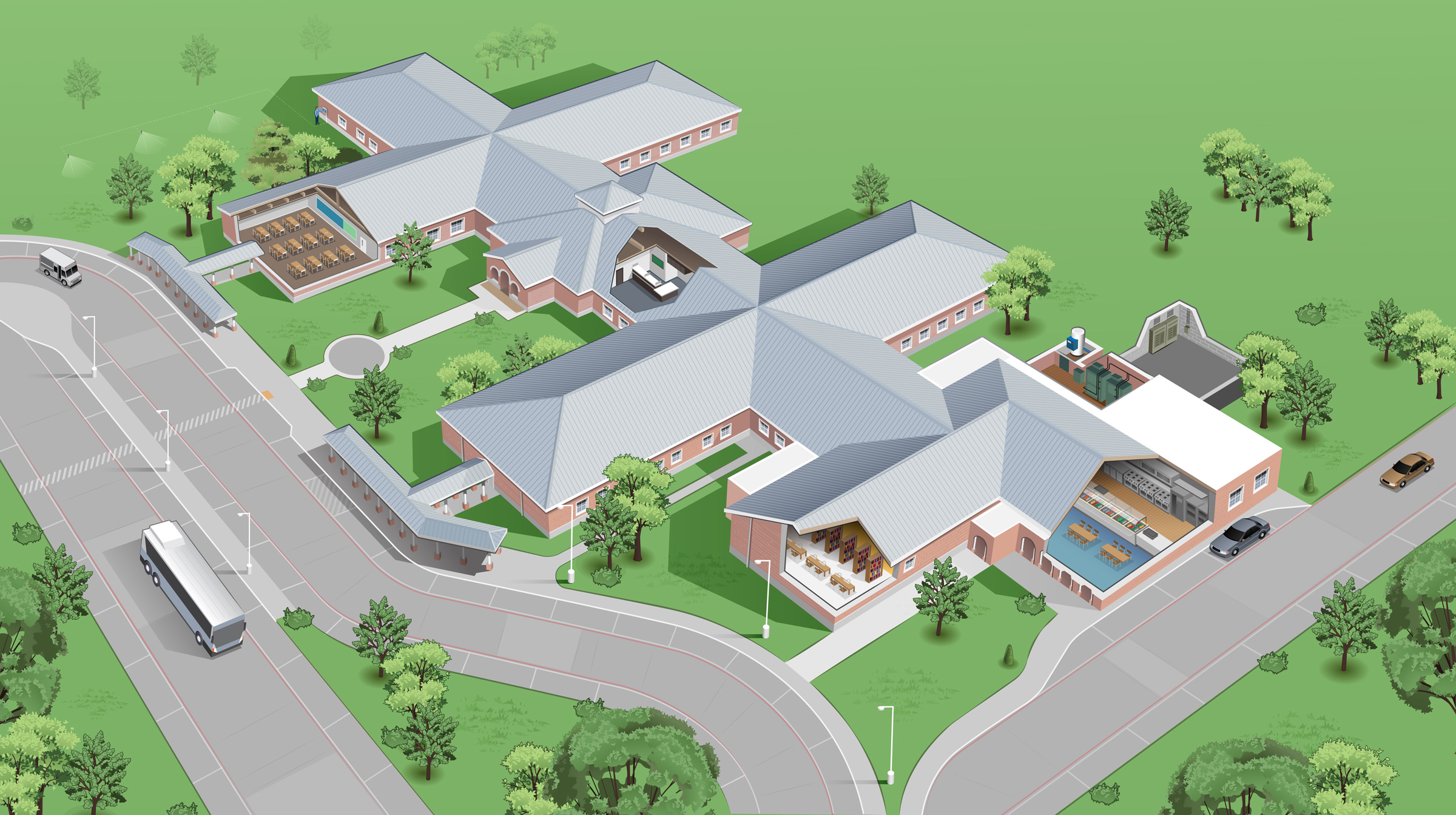
Irrigation Control
Irrigation and turf management experts enhance your team.

Classroom
Active monitoring of airflow, building pressure, humidity, temperature and CO2 levels means more comfortable classrooms that save you energy.

Administrative Area
Active monitoring of airflow, building pressure, humidity and temperature levels reduces comfort issues.

Library
A more comfortable learning environment that protects your learning assets.

Kitchen and Cafeteria
Optimized kitchen equipment staging and utilization through technology and process innovation.

Electrical Service Room
Predictive software and technical resources that learn what is normal and proactively alert you when something is amiss.

Chilled Water System
Engineering and technical resources focus on extending equipment life through system optimization.

Boiler Room
Boiler specialists keep your boilers operating at peak efficiency, provide professional training and development for your team.


Energy consumption in schools rarely lines up with when a building is actually in use. HVAC systems run on the same schedule through winter break, summer recess, and the odd Tuesday when only the gym is occupied for an evening event, because no one has gone back to reset the schedule since it was first programmed. Multiply that across every campus in a district, and energy conservation in schools stops being about any single building and becomes a question of whether school energy systems are actually tracking the calendar the district follows.
Most districts assume the fix means asking teachers and staff to do more: turn off more lights, close more blinds, remember one more thing before leaving for the day. That’s not where the largest savings live. The bigger opportunity is in the systems already running in the background, correcting schedules, setpoints, and sequencing so buildings automatically match how they’re actually used, without adding a single task to anyone’s day.
Adjustments happen in the building automation system and mechanical rooms, not in front of students or teachers.
The result is real savings your team can see and stand behind.
Ways to save energy in schools tend to fall into two buckets: capital projects that take new funding, and everyday adjustments that don’t cost anything to make. Cenergistic focuses on the second bucket first. Classroom conditions like temperature, humidity, and airflow can be actively monitored to keep every room comfortable while running the mechanical systems no harder than the day actually requires. The opportunity is in using that data to keep every room comfortable while running the mechanical systems no harder than the day actually requires.
Our engineers work directly with your existing HVAC and building automation systems to:
Because none of this requires new equipment or a capital budget, how to save energy in schools becomes a question your district can start answering.
Real experiences from organizations turning energy savings into lasting change.
“Before partnering with Cenergistic, we didn’t even know where our energy was going—just that we were using too much. Now, energy conservation is part of our culture. Our schools compete to save the most, our principals are engaged, and our teachers see the savings going directly back to them. It’s not just about dollars—it’s about doing what’s right for our students, our staff, and our environment.”
Chief Operating Officer,
Pinellas County Schools, Florida
We identify hidden utility waste across all campus facilities and convert those losses into verified savings.
No new equipment needed. Our team fine-tunes your existing systems for maximum efficiency and comfort, improving performance across campus.
Our embedded Energy Specialists work behind the scenes and after hours to identify inefficiencies, support facilities teams, and drive sustainable, lasting change without disrupting campus life.
With expert training, real-time tools, and hands-on support, your staff becomes a proactive force for sustainability, savings, and long-term performance.
From student engagement to staff participation, we help foster a campuswide commitment to energy stewardship.
Cenergistic Community helps students turn STEM learning into real-world action. Through hands-on activities and engaging events, students explore energy conservation, build environmental awareness, and become leaders in sustainability—at school and beyond.
What’s Included:
From saving energy in the classroom to inspiring change at home, students discover that the most powerful energy is the kind they don’t use.
The largest opportunities for saving energy in schools come from correcting HVAC schedules, setpoints, and sequencing so buildings automatically match actual occupancy. These changes happen in mechanical rooms and building automation systems, not in classrooms, so programs, staff workload, and the student experience are unaffected.
Effective energy conservation tips for schools include aligning HVAC and lighting schedules with the actual school calendar (including breaks and after-hours events), correcting simultaneous heating and cooling, and using real-time monitoring of classroom temperature, humidity, and CO2 to avoid over-conditioning unoccupied spaces. Behavioral reminders help too, but system-level corrections typically account for the largest share of savings.
An energy audit for schools typically starts with reviewing utility billing data and building automation schedules against actual occupancy patterns, then walking mechanical rooms and classrooms to verify how systems are really running. Ongoing energy management goes a step further, using continuous, real-time monitoring to catch drift after the audit is complete, rather than waiting for the next audit cycle to catch it.
Beyond the system-level changes that drive most of the savings, students can take part in optional programs like in-class energy modules, after-school energy clubs, and STEM-based sustainability activities. These programs build awareness and leadership skills without asking students to take on the responsibility for the district’s core energy performance.